
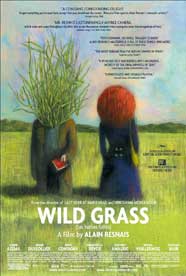
Wild Grass – Film Review

Wild Grass

Wild Grass

Review at National Board of Review web site

Original review posted on June 25, 2010

Thomas W. Campbell

Wild Grass, the latest film by 88 year old French legend Alain Resnais, is a triumph of off-beat storytelling – from the opening theft of a neat yellow purse from a woman with a mountain of wild red hair to the sudden and inexplicable conclusion. Resnais has collaborated with many great novelists and playwrights over the years, including Margarette Duras (Last year at Marianbad), Alan Robbe-Grillet (La Guerre es Finis), Jean Gruault (Mon oncle d’Amérique), Jorge Semprún (La guerre est finie) and Alan Ayckbourn (Private Fears in Public Places, Resnais’ most recent film). Wild Grass, which opened the New York Film Festival last fall, is based on the book “The Incident” by Christian Gailly and it is the first of his 13 novels to be adapted into a film. Resnais’ 22nd feature film is more than a curiosity at the end of a great director’s career – the film is energetic, superbly shot and wonderfully acted. The plot mixes mystery, comedy and melodrama genres in a free-spirited manner that calls to mind the work of French New Wave filmmaker Francois Truffaut’s elegant but somber films The Story of Adelle H and The Bride Wore Black.

André Dussollier as Georges, the middle-aged man who finds the lost red billfold that has been separated from the handbag, and Sabine Azéma, who plays Marguerite, the woman who lost the purse, are veterans of film and theater who create their roles with a full range of humanity. Their actions are believable but impossible to understand – each react to the loss and discovery of the purse in ways that are unexpected, unpredictable, and wholly against their best interests. Resnais investigates their lives through the use of a narrator and internal monologues, continually pulling us deeper into their very human indecisiveness. George and Marguerite’s thoughts circle more and more precipitously around the act. His mind works over the problem with obsessive intent. “Which of the two pictures in her wallet does she look like?” he asks. Finally they no longer seem to remember where the attraction to each other came from.
Continue reading

The Tree of Life – Film Review

Featured

TheTree of Life film review

The Tree of Life

Review by Thomas W. Campbell

Review at National Board of Review web site

Original review posted on May 27, 2011

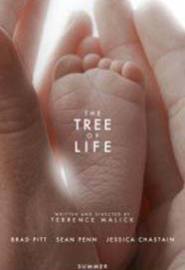
The Tree of Life, the fifth film by director Terrence Malick, is a masterpiece of narrative and style. While this may not help in the marketplace against X-Men, Green Lanterns and drunk bachelors in Bangkok, it will resonate with anyone willing to be challenged–and rewarded–by an unconventional and completely original filmmaker at the top of his game.

Malick’s previous films–Badlands (1973), Days of Heaven (1978), The Thin Red Line (1998), and The New World (2005) have for the most part stood the test of time. Each film features actors who were–or were to become–major stars. And each reveals its narrative in less obviously dramatic and more thoughtful ways than other films of their genres. Badlands slows down the drive of its predecessor, Arthur Penn’s Bonnie and Clyde, and allows us to feel the way Martin Sheen and Sissy Spacek’s pre-punk rebels are part of the landscape that created them. Days of Heaven takes a doomed love triangle and places it into the seductive light (much of it shot in the magic hour just before sunset) and landscapes of the Midwest. The Thin Red Line is a richly character-based war drama that explores death and loss from an unexpectedly philosophical viewpoint. The New World examines the first meeting between Native Americans and Europeans in a way that makes the pristine forests as important as the characters. Malick has a talent to transcend what others might see as limitations of genres and to turn them into meditations on the essential questions of life–why are we here? What should we do about it? What is the true nature of the world itself?

Continue reading

The Skin I Live In – Film Review

The Skin I Live In

On October 12, 2011 I did a Q and A with Pedro Almodovar, Antonio Banderas and Elana Anaya following the preview screening of The Skin I Live In. The screening was a private event for members of The National Board of Review and I can only say in general that we discussed, among other things, the process of adapting the original novel, developing the characters, and the making of the film. Here is a link to my original review on the web site of The National Board of Review.

Original review posted on October 12, 2011

Thomas W. Campbell

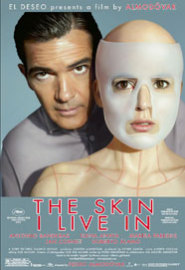
The Skin I Live in, the new film by Pedro Almodovar, is a deliciously dark and twisted tale that is masterfully told and beautifully shot. The cinematography is by veteran José Luis Alcaine, who last worked with Almodovar on Bad Education (2004). Alcaine’s work is classical and assured, reminiscent of John Alcott’s cinematography for Stanley Kubrick in The Shining and Clockwork Orange. The image has a classical and substantial look that fully supports the carefully crafted screenplay and restrained but simmering performances. Although much of the film fits comfortably into the horror film genre there are no creeping hand held shots with forced POV perspectives. Almodovar abhors the cheesy tricks of genre storytelling – almost as much as he loves to exploit the conventions and expectations that the narrative presents. The Skin I Live In is foremost a melodrama, filled with the passions and risks, roller coaster emotions, and the dark twists one would hope for. It’s also a mystery that announces itself gradually, a thriller, a crime story and, most unexpectedly, a bittersweet and dangerous tale of love and loss.

The three central characters in the film live in a stately mansion on the outskirts of Toledo, Spain that is spacious, elegantly furnished, and comes equipped with some additional odd features – a room that is locked from the outside, security cameras that watch an inhabitant’s every move and, in the basement, a world-class surgical laboratory. Marilla, played by Marisa Paredes (Huma in All About My Mother and veteran of numerous Almodovar films) is the housekeeper and mother figure who literally keeps an eye on Vera (Elena Enaya). Marilla keeps an eye on a closed circuit camera that projects images from the younger woman’s spacious room – a room that is also a prison with heavy doors that are locked from the outside. The master of the house is Dr. Robert Ledgard (Antonio Banderas), a famous plastic surgeon who has pioneered revolutionary techniques for facial reconstruction. It is Ledgard who lords over Vera and we soon learn that his attempt to develop a super durable human skin replacement is related in some way to his captivity and domination of the woman. Vera, young, beautiful and rebellious, is also the central mystery of the film – why is she there and what is happening to her?

Continue reading

Machines, Mood and the Future of Happiness

Happylife

Are we ready for the interactive world?

The purpose of museums are to enshrine the past – it was filmmaker Luis Buñuel who suggested that we destroy all of them and start over. But the Museum of Modern Art just concluded an exhibit that seemed to come from some point in the future. Talk to Me, which closed on November 7, 2011, brought together hundreds of examples of machines that communicated with human beings in funny, complex and extremely thought provoking ways.

Machines allowed interacting humans to experience becoming an animal, let men feel what it is like to have a painful and messy menstrual cycle, linked phone calls and text messages to a device that slowly asphyxiates the one who answers, put the game player into a Gentrification Battlefield, demonstrated a device that allows a paraplegic graffiti artist to continue experiencing the rush of tagging large buildings using interactive software and laser projection, and presented a demonstration of a slingshot that let you paint SMS text messages across the surfaces of buildings (again using laser light projection). And, if you needed a metrocard to get home there was a full-scale working metro card machine ready to take your money. Some of the ideas were simple yet compelling – a beige retro disk drive able to detect when liquids are spilled would rise up like an animal with little legs to avoid damage to itself – a machine able to physically demonstrate self-preservation.

Ready or not – the interactive world is already here.

Continue reading