Filmmaker Interview – James Szalapski

Featured

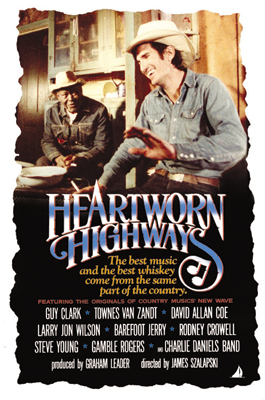
Heartworn Highways DVD Cover

I met James almost 20 years after he made Heartworn Highways. He came into an edit studio I was working at to cut a trailer of an independent film he had shot. We became friends pretty quickly, finding that we were interested in the same kind of things – telling stories, wrestling with technology, UFOs and government conspiracies (which led us both the X Files). James was an accomplished cinematographer with one of the brightest and most inquisitive minds that I’ve ever met. He liked to problem-solve especially in story telling and the technical ways we communicate them. But James was also a pioneer who moved to New York City from Minnesota 10 years before I moved to New York City from Vermont (He was 10 years older than me). When he came to the city he found an empty and essentially forgotten PreSoHo and moved into an incredible loft space on Spring Street, struggling and ultimately watching the region transform around him.

James was a pioneer who became a friend and mentor – he made a lasting impression on anybody who met him by being continuously supportive and always interested in what you were doing.

Whether shooting a documentary for PBS one month or directing a film with Roy Schneider later in the year James would always welcome the opportunity to actually tackle a new production problem – he was eternally ready to jump into life. Which made it all the more difficult for everyone when he finally passed away after and on and off battle with cancer that finally caught him in September of 2000.

Heartworn Highways is the great achievement in the life of someone who did a lot of pretty excellent things. It’s an honest and compelling look at a musical culture that was very much in transformation in 1976 – and was fortunately documented by James Szalapski and his small crew of merry filmmakers.

The following is an interview I did with James Szalapski in 1996, which was transcribed and printed in the DVD booklet that comes with the DVD..

T. Campbell:
At the time the movie was shot, and right up until the time of its original release, the film was called ‘New Country’ but then something happened which made you look for a new title. Could you tell us about that?

J. Szalapski:
They came out with a yoghurt called ‘New Country’, right while we were cutting the movie and there was advertising everywhere … we don’t want people to think its a yoghurt movie, so we changed it to ‘Outlaw Country’ for a while because these guys where referred to mostly as “outlaws,” and tried to go for something more evocative, threw round a bunch of titles and this one came together like a feeling.

T. Campbell:
You mentioned that these guys were kind of, kind of outlaws and they broke off from Nashville… Can you give us some background on that?

J. Szalapski:
Well, by the early seventies Nashville had sort of become very rigid. All the songs were sounding the same, they just turned out product like crazy and they kept country music in a narrow defined range. But the young guys wanted to do something different. A lot of them had gone through the sixties and had experienced the whole explosion in rock and pop music and wanted open it up a little bit. “LA Freeway” is kind of an anthem for these guys; they went to places like LA and New York and, and discovered it wasn’t where they belonged. Their roots were in the South and they had an emotional connection to their grandparent’s generation there. But when they came back to Nashville and to Austin, Texas they brought back with them the electric guitars and the raw sound of their own generation. But the music they were making connected more to a generation older than the one in place in Nashville.

T. Campbell:
They looked to guys like Hank Williams …

J. Szalapski:
They where looking, back to them, and I found that very interesting, this generation jump which I tried to put in the film with some of the older characters in the film. Another thing that was happening was that there weren’t a lot of places to play music in Nashville – outside of recording studios. There were very few clubs there. But in Austin there was and Austin kinda became a new capital for this new music. Austin is a university town, very liberal, pretty advanced and there were a lot of clubs to play music in. It pretty quickly became like a rival to the main, established, “religion” there in Nashville.
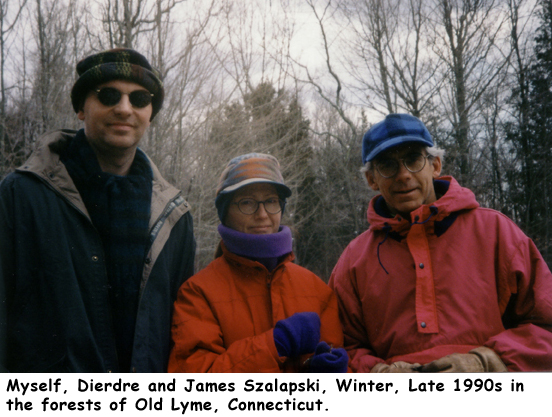
J. Szalpapski and friends

T. Campbell:
I wanna get into how this film was made, but I’m curious that you talked about this group of people, these outlaws.

J. Szalapski:
My connection to all this was very personal and direct. The film is dedicated to Skinny Dennis. Dennis played stand-up bass around LA. And Guy Clark was in LA at that point, this was the late sixties. The movie opens with ‘”LA Freeway” which Guy wrote about LA and he mentions Skinny Dennis in the song, “Here’s to you ol’ Skinny Dennis…” Dennis rambled around and for a time came here to live with me in New York City in seventy-two or so. Guy had gone to Nashville so he went down to visit Guy, and suddenly he felt at home for the first time in his life. When he came back he told me about the scene there and I was at the point where I really wanted to make my own film and I thought maybe this could be an interesting subject. So I went down there and stayed with him and then just met the people that he knew, Guy and Townes Van Zandt. He dragged me over to see David Allan Coe who was kind of very different from them, more outrageous, you know. He’s like the biker. And Townes is the poet and Guy is like superb craftsman/writer …

T. Campbell:
…
He’s the one who repairs the guitar in Heartworn Highways?

J. Szalapski:
He also does that too, yes. Townes would be one of those people who wouldn’t do anything for a year and then sit down and write five songs in one night.

T. Campbell:
Dennis died before you made the film. Was there any forewarning of that?

J. Szalapski:
Well, Dennis had Marfan’s Syndrome. It’s a birth defect. Lincoln had it. And it causes your body to get very boney and elongate. Dennis was six foot seven and weighed 135 pounds that’s why they called him Skinny Dennis. The doctor said Dennis wasn’t gonna make it to his twenties, you know. And, he was a pretty hard partying guy, he didn’t walk around on tip-toes because of his heart problems. Eventually he did die of heart failure. He was twenty-nine. But back in the early seventies he introduced me to everybody in Nashville and Austin. I shot slides, I got copies of their music, most of the guys only had demo’s, they didn’t have albums at that stage. I took all that around and showed it to people to try to raise some money for the thing. And they said things like “Go and get Willie Nelson or Kris Kristofferson as a host for the film” and we’ll think about it, but nobody knows any of these people. But I wanted to go with the guys who were on the way up, I think they, they’ve got the most interesting energy, they’re the avant-garde on this thing that’s happening. So, finally, through George Carroll, I met Graham Leader in Paris who became the producer of the film. He was an art dealer in Europe.

The energy crisis had just hit and the bottom had fallen out of the art market. I played him the music and the music won him over. I also showed him some of my slides. So we went to Nashville and Graham financed what we felt was going to be an hour documentary for television. I think we had thirty-five thousand dollars. In about a month we had a small crew and were underway. We shot a couple of things the first day we were there, it was great, we were off to a running start, but then we didn’t do anything for four days. People’s schedules, cancellations, we just couldn’t get anything happening. The crew was getting grumpy… but then it took off. Way led to way and we started getting other people into it. I’d say it was about two weeks into it we felt we could make a feature film. So Graham he raised more money, basically over the phones and, and we finished shooting everything we could to make a feature. The whole thing took around four weeks.

T. Campbell:
How did the budget determine the style of the film-making?

J. Szalapski:
We went as lean as we could. Me and an assistant cameraman…My assistant cameraman on was also my assistant director, Phillip Schopper. We had worked together before and had become good friends. Phillip’s a very creative person with a lot of good and you want people around you who will keep you honest. Then when we got to the editing room he became the editor and I became his assistant editor. He was there at the Steenbeck doing all the cutting and I was finding stuff and looking over his shoulder.

And of course we would always confer about the editing with Graham Leader who stayed in New York for pretty much the whole course of the finishing the film. The grip was Mike Harris, Skinny Dennis’s best friend, who was then living in New York also. Larry Reibman was the gaffer. Larry was working for a film equipment rental house at the time and wanted to get out of the rental house and make movies. The sound man was very organic. He was great. Alvar Stugard was his name. Like I would walk into a situation and start looking around for how the light- ing falls and where the lamps are, what this is gonna look like. Alvar would walk around with his microphone and his headphones on, and test the acoustics of the room, and he would find the best sound might be over in the corner and he would say what sounds best for the place what really gives the feeling of place too, you know.

T. Campbell:
This is a technical question before we move on. What equipment did you use to shoot this film?

J. Szalapski:
A 16mm camera. About sixty per cent of the film was hand-held. I shot with an Eclair, French Eclair NPR, which is a difficult camera to use, it’s fairly heavy and the weight is about five inches in front of your chest, so you’re supporting it all with your hands.

T. Campbell:
Did you a use a Nagra stereo?

J. Szalapski:
Nagra stereo. We made a real effort to record everything in stereo.

T. Campbell:
Really?

J. Szalapski:
And the final result was mag stripe stereo, 35mm film with mag stripe on the side. Because this film was done before optical stereo, you know, the whole Dolby optical stereo thing that came into movies happened about two years after we finished the film.

T. Campbell:
So not only the music’s in stereo but the presence, the dialogue track the chickens and the lambs and whatever are in stereo on the soundtrack?

J. Szalapski:
Right, and we tried to get it as high fidelity as possible but we only had two tracks so when someone was singing and playing a guitar we put one mic on the singer and one on the guitar. Then in the mix we would put their voice in the centre, where it is on the screen pretty much, but we’d spread the highs and lows out according to the position of the guitar. If the guitar neck is up to the right, you’d put the highs up there and put the lows down at the body and so we’d have a stereo separation for the scene.

T. Campbell:
Is all of the music performed live?

J. Szalapski:
Yeah. Oh, yeah. You know, people played music, like you and I are talk- ing then a couple of other people would drop over and somebody would say “I’ve got a new song”, and they try out their songs and sing together and so it goes. There was a lot of drinking, these things would go till three, four, five, six in the morning. Eventually people would sort of lose the ability to sing very well, you know, but they could still play. Their body seemed to remember the guitar stuff. I told them what I wanted to do and that I wanted to hear what they had to say about anything in this world, the movement, or whatever.
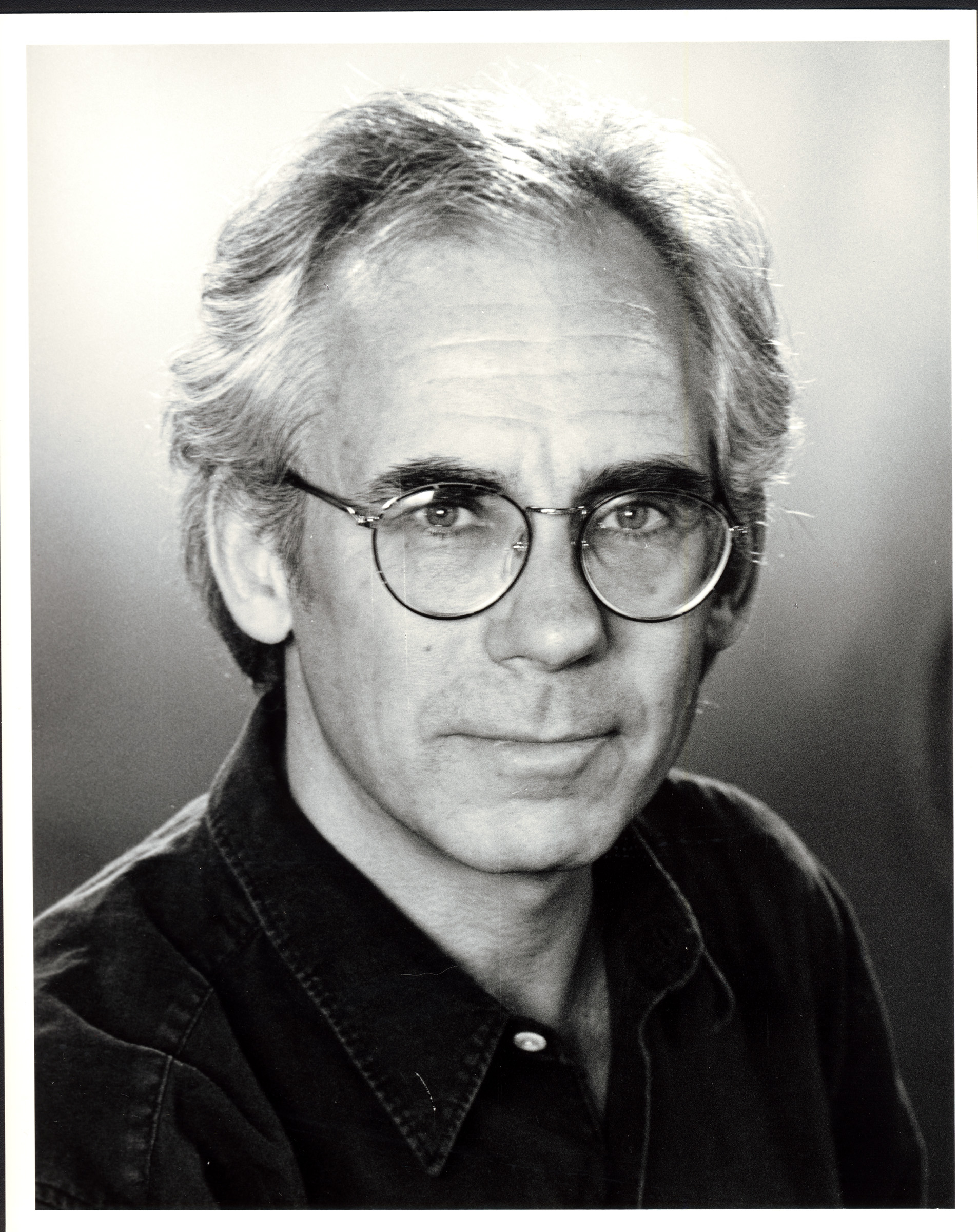
An official portrait that I scanned for Jim. Don't know yet who to credit...

An official portrait that I scanned for Jim. Don’t know yet who to credit…

T. Campbell:
So what, what happened in a sense is that you meet one person, they would introduce you to someone else, they would introduce you to some- body else …

J. Szalapski:
Exactly. Dennis was friends with Townes and Guy they’re both very highly respected in the songwriting community. They’ve written a lot of songs, they’re very original. Once they were both interested in the film people said “Oh, you should go talk to so and so”. Since Guy and Townes were my main characters people would say “Oh well, we’re in. Count us in. You’ve got those guys, we’re in”.
Continue reading

The Debt – Film Review

The Debt
The Debt
Directed by John Madden
Film Review by Thomas W. Campbell

Originally published on August 31, 2011 on the website of The National Board of Review.

On August 23rd, after a preview screening of The Debt, I led a Q and A with Director John Madden and Actress Jessica Chastain. Much of the discussion focused on the relation of director and actors – including the benefits of an extensive rehearsal process.

The Debt, the new film by John Madden, is a remake that stands on it’s own as an international thriller. With healthy doses of romance, intrigue, vengeance and redemption–the film meets the genre requirements and more. The directing is first rate (Madden’s previous films include Shakespeare in Love and Proof), the cast a pleasure of ensemble inspiration and nuance, the cinematography brisk in mobility and rich in tone, and the story is crafted with emotional and suspenseful detail.

An English-language remake of the recent Israeli film Ha-Hov (also known as The Debt), the screenplay was written by Matthew Vaughn, Jane Goldman and Peter Straughan. Although the film had a circuitous route to the screen and ultimately went from Miramax to Focus Features before finally getting a release–the final result is worth the wait.

The script itself is a thing of beauty–it provides an effective structure to the story that reveals information in a way the builds excitement and expectation. Vaughn and Goldman have previously written Kick-Ass and Xmen: First Class (both directed by Vaughn) and Straughan, who came on to work with Madden, wrote The Men Who Stare at Goats and the upcoming Tinker, Tailor, Soldier, Spy. The story takes place between two time periods which are about 30 years apart. The earlier time (1966) involves a plan to capture and return to Israel a known Nazi and war criminal known as Dr. Vogel. Though it sounds familiar this part of the story is developed in a fresh and exciting way, pitting the most vulnerable agent against the doctor (now a gynecologist), while being literally on her back. The modern period of the story takes place in 1997 (thirty years later) and confronts the repercussions of the earlier mission.

The film begins with an iconic short sequence of the three young agents leaving the back of an airplane and walking into the bright Israeli sun, obviously at the conclusion of a mission. Rachel has a large bandage covering her entire right cheekbone. When we meet Rachel in “present day” she has become famous for her actions in the 1966 mission–and her daughter has just written a book about the incident, casting her mother’s actions into the most heroic of light. Helen Mirren plays the present day Rachel and is at her very best–intense, dark, incredibly “thoughtful” (she seizes long moments to digest and try to understand the twists that fate have dealt her) and seemingly at odds with herself. Her actions and the consequences have finally caught up to her. Joining her at a fashionable book reading/release event is Stephan, her former husband, now in a wheelchair. As Rachel reads a selected chapter the film goes back to 1966 for the second time–she is reading the “official story” and what we see is a “re-enactment” of that version. When we return to the present, the harrowing events of how they captured and dealt with the fate of the Nazi doctor is truly heroic.
Continue reading

Midnight in Paris – Film Review

MidnightinParis
A film by Woody Allen
Review by Thomas W. Campbell
Originally published on June 10, 2011 on the website of The National Board of Review 

Midnight in Paris, Woody Allen’s best film since 2008’s Vicky Cristina Barcelona, was shot on a modest 30 million dollar budget and gets every cent of filmmaking value from the Paris locations and smart production design. The film opens with a song-length montage of Paris in the day, in the rain, at sunset, and in the evening. It is a beautiful and carefully constructed sequence of short iconic shots seemingly using every conceivable objective view of the city. As we move across the urban Paris landscape, a Sidney Bechet New Orleans-tinged jazz song plays in its entirety. The sequence announces two things that we can expect from the film—lots of Paris and a heavy sampling of early American jazz. With a soundtrack that features the music of Cole Porter, The Glenn Miller Orchestra, Josephine Baker, the Charleston, and the Can-Can, Allen has again demonstrated his ability to mine the history of his favorite American Music to better tell his stories.

Allen has become one of New York’s most international storytellers and in Midnight in Paris the subject (a confused writer) and setting (Paris then and now) converge wonderfully. Although Owen Wilson as Gil, the Woody Allen persona in the film, is an odd casting choice he is likable and makes the role work. Wilson is not a method actor—his acting style can best be described as wide-eyed wonder or small-eyed sadness. At this stage of his career he is a good actor who is at his best when basically playing himself, for instance in his numerous collaborations with Wes Anderson (The Royal Tenenbaums, etc.). He bumbles in a different way than Allen does. Wilson uses confusion in a slow and deliberate way, as though he will understand something if just given enough time. Allen is too nervous for calm contemplation—his first instinct is anxiety-releasing chatter.

Continue reading

My Week With Marilyn – Film Review

MyWeekWithMarilyn
A Film by Simon Curtis
Review by Thomas W. Campbell

I moderated a Q and A with Harvey Weinstein after the NBR screening of Marilyn   – it was a far ranging and quite energetic discussion.

Originally published on December 23rd, 2011 on the website of The National Board of Review. 

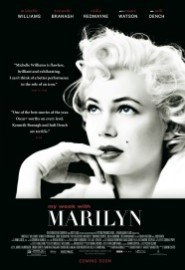
My Week With Marilyn, directed by Simon Curtis (Cranford, A Short Stay In Switzerland), is the possibly fictional but entirely moving story of a young British man from good society who meets, and falls in love (maybe not in that order) with the woman behind the great American 1950’s icon of sex and pleasure. It’s a story that works best as fantasy yet is based on two books by Colin Clark that recount the experience – the first (The Prince, the Showgirl, and Me, 1995) a recounting of the pretty obviously disastrous pairing of Lawrence Olivier and Marilyn Monroe in the cinematic restaging of The Prince and the Showgirl and the other a further exploration of the event that focused on a special week with Monroe (My Week with Marilyn, 2000). Although he became a successful filmmaker of the arts Clark lived beneath the shadow of his father (Sir Kenneth Clark) a famous art historian and his younger brother, the conservative politician Alan Clark. Published two years before his death, My Week With Marilyn offered an experience unique enough to draw the spotlight from politics and art and shine it directly on him (and Marilyn).

My Week With Marilyn is brisk, witty, a bit sad and filled with excellent actors having a great deal of fun (even when they are spending most of their time worrying about Marilyn’s emotional instability). It is shot well, set in many of the original locations in and around Pinewood Studios, and edited in a snappy way that highlights the comic and keeps the story moving. Kenneth Branagh portrays Olivier with a flair for the melodramatic, as a man lost in the theater who cannot understand why those around him won’t simply trust the script and do the job. By 1956, when The Prince and the Showgirl was produced, Olivier had made his name as one of the great actors of British theater and expected that he would find that same success on the big screen. But his instincts were old fashioned – whatever he thought he saw in the adaptation of the play to cinema was completely ill suited for his purposes. Watched today the original film feels like a parody of everything bad that can happen to a play when it is brought to the screen – stiff overacting, sets that are obviously studio inventions, stereotypical portrayals of royalty and commoners. The irony was that Monroe brought the project to Olivier, thinking it would work for both of them. Colin Clark’s character says it best to Marilyn in the film: “You’re a movie star who wants to be a great actor, he is a great actor who wants to be a movie star. This film won’t help either of you.” Branagh gives Olivier a sense of desperation that is very likable and quite humanizing. As a director he has been given access to a talent that is pure gold in terms of cinematic value – but he has no idea how to develop the visceral and intuitive skills that Monroe brings to the table. In one agonizing sequence he stops what most likely would have been a wonderful and film enriching performance by insisting that Monroe speak a completely unnecessary word – crushing her performance with every take. It would be as if George Martin, the legendary fifth Beatle who molded their sound with love and patience, decided that they should not write their own songs and that sitars and backward sound loops would be banished from the recording studio. Most deliciously, Olivier finds himself caught between the agony of working on set and the terror of the screening room when his wife, film star Vivian Leigh (Julia Ormand) breaks into tears at the sight of Monroe’s onscreen beauty (and Olivier’s supposed admiration of it) and tells him that she hopes Marilyn makes his life hell.

Continue reading

My Week With Marilyn – Editing for Comedy

In my review of My Week With Marilyn I called the editing of the film “snappy” and mentioned that it was often cut with comic intent in mind. The best example of this is the sequence that takes place about three and a half minutes into the film that involves Colin Clark’s attempt to convince the gate keeper at Olivier Productions to give him a job. It’s a brilliant example of montage editing that moves briskly and uses a number of editing techniques to heighten comedy and create an appealing sense of energetic movement.

Colin Clark, who comes from a very well endowed family, has just announced his decision to find work in the film business, and his mother’s response, as they walk from the family castle, is that she is “sure” he will soon become a famous director. This sets up the next scene nicely – he immediately runs into the obstacles of reality. Some of the humor comes from the voice over “like every young man I had to make my own way”, delivered as the obviously upper class young man struts into the Oliver production office to present himself. The man he faces, a grim older gentleman who seems determined to cast happiness from his own existence, is firm – there are no jobs. And his immediate response to Colin makes it seem like the young man has a disease – “You’re an actor, aren’t you”. But Colin is determined and returns each majoring to wait out resistance.

Performance and cinematic execution is key to comedy but the glue that really makes it work is the editing. The first meeting concludes with two closeups – Colin asks if he can wait for a job and the Production Executive not only glares back at him (almost at the camera) but half bites his lip in disdain.

The sequence kicks in with the Executive’s scowl. Peppy jazz music, with brass and perky drum hits, accents a serious of quick and efficient shots: A pretty secretary types, Colin sits perfectly frame centered on a large leather sofa nervously adjusting his tie, then a series of jump cuts reveal him moving about the dark wood paneled room, the secretary glancing at him (while the steady rhythm of her typing punctuate the soundtrack), the day passes and the executive finally leaves his office, only to see Colin waiting on the sofa. The montage and typing continue as Colin maneuvers through the street and once again enters the massive room and sits in front of the secretary. The tempo of the editing suggests that something has to give – the pretty secretary looks at him and remarks about his determination – and Clark says that he will do anything to get the job. Cut to a closeup of the secretary as she says, with a twinkle in her eye “anything?”. Before the viewer can wrap one’s mind around the possibilities of her gaze a phone rings off camera and we cut to – Colin at her desk taking the call. It’s a wonderful edit that plays with expectations and gives immediate and comic gratification. The disbelieving reaction shot of the film executive as he comes from the next room to investigate why he is hearing Colin’s voice on the phone keeps the humor flowing. The sequence is capped by the executive’s seemingly impossible request to get Noel Coward’s phone number – a number that is not in the directory. Cut to a reaction of Colin already putting his mind to the task and then a paper appears on the Executive’s desk – it is Colin’s hand presenting the phone number to the surprised executive.

The editing is by Adam Recht, who may have picked up his deft editing touch from years of working in television, and this early sequence establishes a tempo that superbly fits the comic needs of this reminiscence of a story.

New Media for Filmmakers and Educators

Thomas W. Campbell

This entry is an initial response to the challenge of embracing New Media as a creative and business model for filmmakers, journalists and teachers.

Part 1 – What is New Media and why is it so valuable?

New media is a concept that comes almost intuitively to students – which means that professionals in academic environments, specifically college professors, have a wonderful opportunity to connect with them in a direct and engaging manner. It’s not a matter of being hip or trendy, especially in the eyes of our students. Understanding and implementing a meaningful New Media curriculum is a way to challenge students to address what they intuitively know and to help prepare them for digital realities of the creative and technological market place.

How do students – and adults – use new media in day-to-day lives? According to the 2011 Horizon report, recently released by the New Media Consortium . “The abundance of resources and relationships made easily accessible via the Internet is increasingly challenging us to revisit our roles as educators in sense-making, coaching, and credentialing…” The internet is making our work more mobile, more collaborative, and more complex. The mobile phone is a powerful new media tool that we, as professors, often disdain (at least in the hands of our students). It turns out that mobile devices (phones, iPads etc) are a major technology to watch – and consider adopting – according to the Horizon report. They are already in the hands of almost every student – why not find ways to integrate it into the learning experience? WordPress, for instance, one of the coolest and most powerful blogging platforms – has a mobile app for blogging and editing. Wouldn’t it be cool – and useful – if students began to think of their phones as creative academic tools?

Continue reading

Carnage – Film Review

polanski-carnage-images-poster 2

Carnage
Directed by Roman Polanski
Review by Thomas W. Campbell
Originally posted on December 16 on the National Board of Review web site.

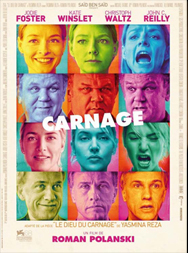
Carnage is Roman Polanski’s film adaptation of the play God of Carnage, written by Yasmina Reza in 2006 and first produced in Germany, Paris and London with original cast members including Isabelle Huppert and Ralph Fiennes.

The play appeared on Broadway in 2009 with James Gandolfini, Hope Davis, Jeff Daniels, and Marcia Grey Harden all being nominated for Tony awards as the couples who meet up after their sons have a fight in a Brooklyn park. Those who have seen the English language productions will notice some interesting word play at work – Polanski insisted on creating a new translation of the original French language text before working with the author to adapt the play to the screen.

Carnage is a bit like Who’s Afraid of Virginia Woolfwithout the jagged violence and Rabbit Hole without the debilitating pain of loss. It is a relentless film that pulls the viewer into a real time scene that recreates the experience of live theater in an exciting and cinematic way. Except for two shots, the opening and closing long-duration takes of kids playing in a New York Park park, the story plays out completely in real time. Beginning with a shot of the legal letter that the couples are composing in regards to the incident that brought them together and ending on a tableau of the exhausted couples, unable to respond to anyone or anything in the room, Carnage unleashes a powerful menage of acting, directing and cinematic techniques. With no “opening up” of the story by adding scenes or shifting locations for visual variety the film is lean (78 minutes), condensed, and pulsing with the non- stop energy.
Continue reading

Tinker, Tailor, Soldier, Spy – Film Review

Tinker, Tailor, Soldier, Spy

On November 18, 2011 I did a Q and A with the director, the writer and the star of Tinker, Tailor, Soldier, Spy, following the preview screening of the film. I was joined by Tomas Alfredson (director), Peter Straughan (co-writer), and Gary Oldman (George Smiley).  Until last minute travel complications intervened the group was also going to include Colin Firth, Tom Hardy, Benedict Cumberbatch, Toby Jones and Mark Strong. Although the Q and A was a private event for members of The National Board of Review I can say that despite the diminished size of the party the discussion was lively and I came away with a deep appreciation of the talents of the three men.

Review at National Board of Review web site

Originally posted on December 9, 2011

Thomas W. Campbell

“The story is a simple one. A king is toppled from his thrown and the rightful heir is cast into the wilderness. The heir struggles to find out what happened, and after a battle finally returns to take his rightful place on the thrown.”

– Peter Straughan, co-writer of the film Tinker, Tailor, Soldier, Spy

John le Carré’s spy novels, many which feature George Smiley as the central character, have been best sellers since he left the British Foreign Intelligence in the early 1960’s. Recreating his own persona for confidentiality reasons, David Cornwell became John le Carré and began to publish a string of complex and memorable espionage novels, many which have been adapted to television and theater. The first screen adaptation, The Spy Who Came in from the Cold, starred Richard Burton and was directed by Martin Ritt in 1965. The first incarnation of George Smiley appeared the following year, in Call for the Dead, directed by Sydney Lumet and starring James Mason. Other notable film screen versions include The Tailor of Panama (2001, directed by John Boorman and starring Pierce Brosnan) and The Constant Gardner (2005, directed by Fernando Meirelles and starring Ralph Fiennes). Tinker, Tailor was adapted as a British television series in 1979, pairing Sir Alec Guinness with the Smiley role. The first in a trilogy of novels that pit Smiley against a brilliant Russian cold-war nemesis named Karla, the second book (Smiley’s People) was produced, again with Guinness, but the third, The Honorable Schoolboy, never made it to the screen.

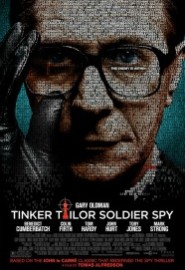
Tinker, Tailor, Soldier, Spy, directed by Tomas Alfredson and starring Gary Oldman as the master spy George Smiley, has been vetted by le Carré, who met frequently with the writers and director, and has an executive producer’s credit. He basically told them to make their own film – the series and the book have a life of their own – and that’s what Alfredson and his team has done. Tinker, Tailor is a stylish, intelligent and challenging film that does the spy genre justice – it dispenses with the pummeling violence of conventional espionage/action genre stories – each trying to out-Bond the Bonds and out-Bourne the Bournes – and serves up nuanced acting, crafty plot construction and sumptuous visual style that is both gritty and elegant.

The screenplay, written by the husband and wife team of Bridget O’Connor (Sixty Six) and Peter Straughan (The Debt, Men Who Stare At Goats), distills the 432 page book into a tight and engaging two hours. (The film is dedicated to Ms. O’Connor, who passed away in the fall of 2010). The nine main characters engage in a game of deception that tests the limits of loyalty – to country, to the concepts of good and bad, and to friendship on the most personal levels. Meanwhile the film portrays, in the most believable and stylish of ways, the lifestyles of the British Secret Service circa 1972.

Continue reading

The Kids Are All Right – Film Review

The Kids Are All Right

On July 29, 2010 I did a Q and A with the director, the writer and the cast of The Kids Are All Right, following the preview screening of the film. We were joined by Lisa Cholodenko (director/writer), Stuart Blumberg (writer), Juliane Moore, Mark Ruffalo, Mia Wasikowska, and Josh Hutchinson.  The Q and A was a private event for members of The National Board of Review so I can not discuss the details – but I will say that it was an incredibly funny and thought provoking event – and the largest group of talent I have sat down to talk film with so far. Below is a link to the original review as published by the National Board of Review.

Review at National Board of Review web site

Originally posted on July 30, 2010

Thomas W. Campbell

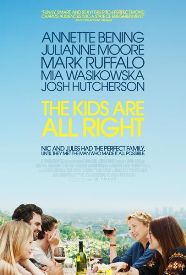
The Kids Are All Right, the fourth feature film directed by Lisa Cholodenko, is an endearing comedy that ultimately takes a serious look at the emotional and psychological dynamics of complicated and modern family life. Annette Bening and Julianne Moore play Nic and Jules, a lesbian couple living in California who have given birth to two children through artificial insemination. Joni (Mia Wasikowska) is preparing to leave for college, which creates stress in the family and her younger brother Laser (Josh Hutcherson) is spending time with someone who “the moms” feel is beneath him. But these are normal developmental issues that families confront and manage to handle all the time. Things get more complicated when Laser decides that he would like to know who his biological dad is and Joni reluctantly agrees to help. When Paul, who is played with an endearing boyishness by Mark Ruffalo, learns that he has an offspring he agrees to a meeting. But his life gets a real twist when he discovers that he has fathered two children and that the parents are both women. “Oh, I like lesbians” he tells Mia on the phone, while cringing that it may have come out wrong.

It’s a great story set-up that pulls us in because all of the characters are so likable and realistic. Nic wears the pants in the relationship and Ms. Bening plays the driven A-type personality expertly. She is immediately suspect of Paul, explaining over lunch (many of the important events in the film happen during meals or around food) that she understands he is in the “food-service” industry. The similarities between Paul and Jules, on the other hand, are immediately apparent. Ms. Moore plays her role with a touching vulnerability – she is a woman without inherent career drive, having tried her hand at architecture before settling into a “housewife” role. But she surprises Nic with news that she has bought a used truck as part of a new plan to begin a landscaping business. When Paul wants to hire her to transform the backyard of his house she is unsure – but despite her protests he becomes her first client. Jules gains a newfound sense of confidence through the work but Nic becomes uncomfortable with the shifting nature of their relationship.

The script is extremely well crafted, the result of a first time collaboration between Ms. Cholodenko and Stuart Blumberg (Keeping the Faith). The universal nature of the story makes it understandable on an emotional level to anyone who has been through family issues and the specific nature of the lesbian “moms” brings a nice twist that feels contemporary and relevant. The family faces internal issues – Joni is about to leave the nest – and must also confront the arrival of Paul, an event that becomes more complicated than anyone expects. The interaction between the family and Paul has a complexity that feels natural – like real life it is a bit messy. The kids develop a strong attraction to Paul’s relaxed way of life, finally isolating Nic as the only one not under his sway. Allegiances sway as Paul’s influence is felt by each one he touches until a crisis threatens to split the family. Regaining trust once it has been damaged is a process and the film sets the family back on the road of forgiveness without making things too simple.

The Kids Are All Right is a good-looking film, much of it shot in natural light. The soundtrack uses a mix of classic rock and newer music to reflect the multigenerational characters and especially benefits from the subtle touches of composer Carter Burwell, who creates simple and moving musical accents to give emotional weight. What makes this film work so well, though, is the strong script and the comfortable performances of the fine ensemble cast. It’s a pleasure to watch Bening and Moore working out their family issues, Wasikowska and Hutcherson struggling with their allegiances between their “moms” and biological father and to see Ruffalo go from nice guy to potential home wrecker. The Kids Are All Right is more than all right – it’s one of the funniest and moving films of the year.

Bill Cunningham New York – Film Review

Bill Cunningham NY

Review at National Board of Review web site

Originally posted on April 7, 2011

Thomas W. Campbell

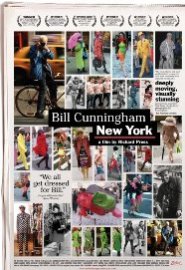
Bill Cunningham is nearly 82 years old and still travels the streets of New York on his bicycle–taking pictures by day of street fashions (regular people dressing up) and by night of the most elite members of society (rich people at charity and social events). Bill Cunningham New York, directed by Richard Press and released by Zeitgeist films, displays Cunningham’s life in a way that reveals a quirky, principled, talented artist who follows a single idea to it’s most interesting conclusion. For Cunningham, fashion photography is a continuous and lifelong love affair with the unique and the individual.

The film begins with Cunningham taking his dependable Schwinn bicycle from an overstuffed storage closet and leaving a building that we will soon learn is Carnegie Hall. Setting off, he navigates the bumpy streets of New York City, on the prowl for the something unusual to train his lens on. “The best fashion show is always on the street,” he says. “Always has been, always will be.” A bouncy jazz soundtrack–drum and saxophone music by the downtown artist John Lurie–adds momentum to a montage of colorful, odd, and often outlandish street clothing that he has shot for his New York Times “On The Street” column. Cunningham waits for the world to pass in front of him, stalking the street for fashion unknowns, immortalizing a chosen few each week.

Just as the viewer begins to wonder “Who is this guy?”, Press introduces the same question into the film. Everyone in the fashion world seems to know who he is–but nobody seems to really know anything about his life. Bill Cunningham might have one of the most interesting and individualistic careers in the world–and may also be one of the least “known” photographers working today.

Continue reading